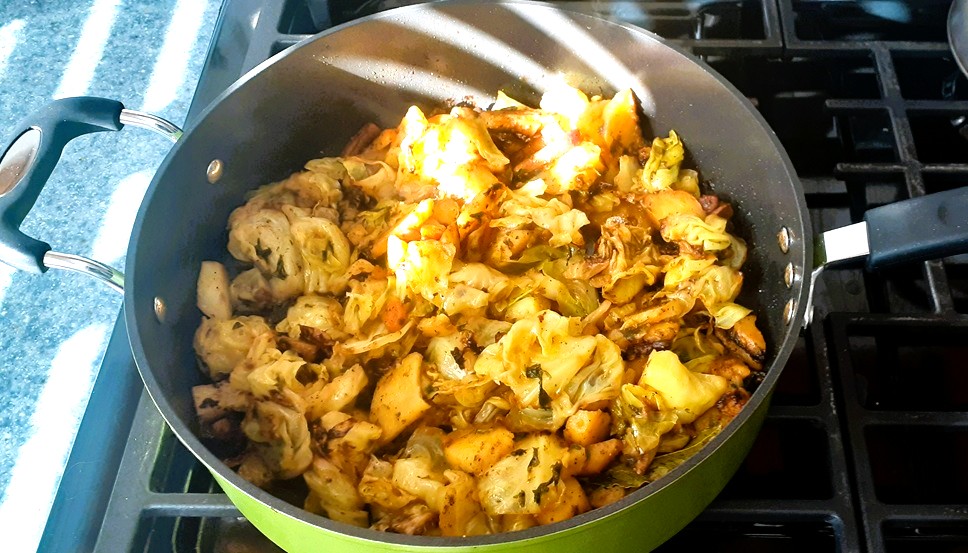
Eat organic and use filtered, purified or spring water for drinking and cooking, anytime you can.
Choose Organic
Vegetarian eat mostly plant based food. A big issue here is genetically engineered crops, pesticides and herbicides. The best you can do is to buy everything organic anytime you can, even your spices. Organic products are not genetically modified and they are without pesticides or herbicides, thus contribute less to the buildup of toxins in our bodies. The easiest way to know if a product is organic would be to see if it is labelled so. It should be mentioned. However, some products are falsely labelled organic. Sadly, there are many. Fortunately, the USDA (United States Department of Agriculture) maintains a database of products that are truly certified to be organic, the “Organic INTEGRITY Database“. Similar databases must exist elsewhere.
Dairy products
Use organic dairy products anytime you can. Choose milk preferably from well-kept cows, cows raised naturally in pasture, not treated with antibiotics or hormones. Also not all cheeses are vegetarian. Read the labels and look for the words “vegetarian”, “microbial rennet” or “vegetable rennet”. Most cheeses are made with animal rennet, most precisely coming from slaughtered baby-ruminants. Avoid cheeses that have vague terms such as “rennet” or “culture”. It could be anything. If it is not specified, chances are they are not vegetarian. Better yet, consume products from happy cows, those that are not abruptly separated from their newborns for their milk or slaughtered when they are no longer profitable. These are the best.
Broths and Bouillons
Broths and bouillons are very practical and give flavor to our dishes, but those we generally find on shelves are rarely organic, vegetarian or without unwanted ingredients. What most often makes the special flavor of broths is monosodium glutamate ( MSG ), an ingredient which occurs naturally in many foods and even in our bodies. MSG also exists in a synthetic state sometimes used in some broths and bouillons and and processed foods. It has unfortunately become a very controversial food additive.
This study lists some foods which seem to trigger MSG-toxicity. But there are studies like the ones mentioned in this review of multiple studies about MSG’s alleged dangers on human health.
If you often buy bouillons but worry about MSG, there are other options. You can buy organic bouillons without MSG. Another solution will be to make your own broth with fresh organic vegetables and your favorite spices. This has the added advantage of consuming only what you really want. To enhance the taste of your broths, add carrots with a hint of lemon juice and some vegetables with natural MSG such as peas, tomatoes, potatoes, etc. Use rainbow carrots for more flavor. Or you can simply cook a soup of your favorite vegetables and collect the juice as broth.
Canned goods
Use fresh food anytime you can. If you must use canned food, choose glass jars without preservatives. Most metal cans linings have BPA (Bisphenol A), a hazardous material, the same material found in plastics. BPA in the lining can migrate into the food contained in the cans. Some food producers aware of the attention paid to this fact, are looking for alternatives to BPA. Cans bearing the words “Non-BPA Lining” are multiplying on store shelves.
Choosing ingredients carefully and cooking our own food has the considerable advantage of minimizing our consumption of unwanted ingredients or toxins that can have a detrimental effect on our health.
Water
Use water purified from all harmful elements including fluoride for drinking and cooking. Tap water sometimes contains heavy metals, fluoride and a host of drug residues. The most common methods used in purified water found in shops are reverse osmosis and distillation. It is mentioned on water bottles. You can also install a purification system on your water supply, use a filter that uses the reverse osmosis system or another that removes all toxins including fluoride. Common water filters like Brita, Pur, etc., do not remove fluoride. Spring water contains a small amount of naturally occurring fluoride. If you can’t find purified water, add coriander and turmeric to your ingredients. These two spices are known for their cleansing properties.
What About Our Kitchen Ustensils?
It is logical that well choosing our food ingredients is completely useless if we end up cooking, warming, storing or eating in toxic ware. It is hard to avoid everything that could be toxic now a days, but she should follow some basic rules:
- Avoiding heating food or storing hot food or drinks in plastic containers and cups; Microplastics and toxins can leak into your food or drinks. Hot food is better stored in glass, ceramic or new bone bowls and containers.
- Avoiding disposable dinnerware, food packaging and cups in plastic, aluminum and those that have hidden per-and polyfluoroalkyl substances (PFAS) i.e., “forever chemicals“; disposable food packaging often contains forever chemicals.
- Avoiding non-stick cookware coated with PFAS like Teflon; Ceramic and Stoneware are generally better alternatives.
- Choosing natural wood ustensils over those that are coated with some unknown substance.
Microplastics are everywhere. It has become nearly impossible to avoid them. They seem to be everywhere, in food, air, bottled water, even rainwater and glaciers. Whilst we can’t totally avoid them, we can do our best to minimize their ingestion because the long-term effects they might have on our health are still unknown.
We can make our own small contribution here by decreasing the production and use of plastics just by recycling properly the plastics of our day-to-day lives. No contribution is too small.