Category: Organic, plant Based Diet

Everything vegetarian or vegan and any subject that can help Vegetarians and Vegans in their lifestyle.

  • The Impact of Feeding on Animals

    The Impact of Feeding on Animals

    Here are some excerpts from very informative articles which show how raising animals for food has a direct impact on the environment and on our health. These articles are so interesting and important, it would be a shame to miss reading them. Links to the original articles are posted below the excerpts.

    The Impact on the Environment

    Here are some numbers from the PETA site, an organization that informs and cares about the treatment of animals.

    • “When land is used to raise animals instead of crops, we lose water and land, trees are cut down to make room for pastures or factory farm sheds, and untreated animal waste pollutes rivers and streams. […]  Cows must consume 16 pounds (1 lb=0.45 kg) of vegetation in order to convert it into 1 pound of meat.
    • Raising animals for food uses more than half of all the water used in the United States. It takes 2500 gallons of water (1 gallon=3.78 l) to produce one pound of meat, but only 25 gallons to produce one pound of wheat. 
       
    • Producing a single hamburger uses enough fuel to drive a small car a distance of 32 kilometers. Of all the raw materials and petroleum used in the United States, more than a third goes into raising animals for food.
    •  A typical hog factory generates the same amount of raw waste as a town of 12,000 people. According to the Environmental Protection Agency, raising animals for food is the number one source of water pollution.”

    Here is the original article.

    The Impact on Our Health

    Here is an excerpt from a guardian.com article.

    “There are a number of concerns about the impacts of industrial meat production on our own health, beyond environmental issues. Bacterial infections that can be transmitted to humans, such as salmonella and campylobacter, can spread on large farms. The ability of these pathogens to enter the environment around farms and slaughterhouses, and to make humans sick, is a major modern concern.

    Although there is a problematic dearth of research on the link between antibiotic use in animals and the growing problem of antibiotic resistance in humans, scientists and policymakers agree that it is an important part of the problem. The volumes here are significant: in the United States, an estimated 80% of all antibiotics are for farm animals.”

    See the original article here.

    Here are a few lines from a Washington Post article also.

    “A research division of the World Health Organization announced on Monday that bacon, sausages and other processed meats cause cancer, and red meat probably does too. The WHO findings were written by a panel of 22 international experts who reviewed decades of research on the link between red meat, processed meats and cancer.

    The panel looked at animal experiments, human food and health studies, and cellular mechanisms that could lead red meat to cancer. In reaching its conclusion on red meat, the panel ‘considered all relevant data, including substantial epidemiological data showing a positive association between red meat consumption and colorectal cancer and strong mechanistic evidence,’ according to a statement released by the band on The Lancet’s website.

    The panel also cited studies suggesting that eating an extra 100 grams of red meat daily increases the risk of colorectal cancer by 17%; eating an extra 50 grams of processed meat daily increases the risk by 18%, according to the cited research.”

    Read the original article here.

    The Impact on Our Hearts and Minds

    From my personal experience, I know that being a vegetarian has developed in me a true compassion for animals; and this compassion transformed my perception of these beings and it change yours also. Compassion transforms hearts.
  • How to Replace Animal Protein in your recipes

    How to Replace Animal Protein in your recipes

    It is easy to create a vegan or vegetarian version of most of your favorite dishes and improve them by choosing healthier ingredients. Peas, beans and many other protein-rich vegetables are a great substitute for meat, poultry and fish.

    The sauces

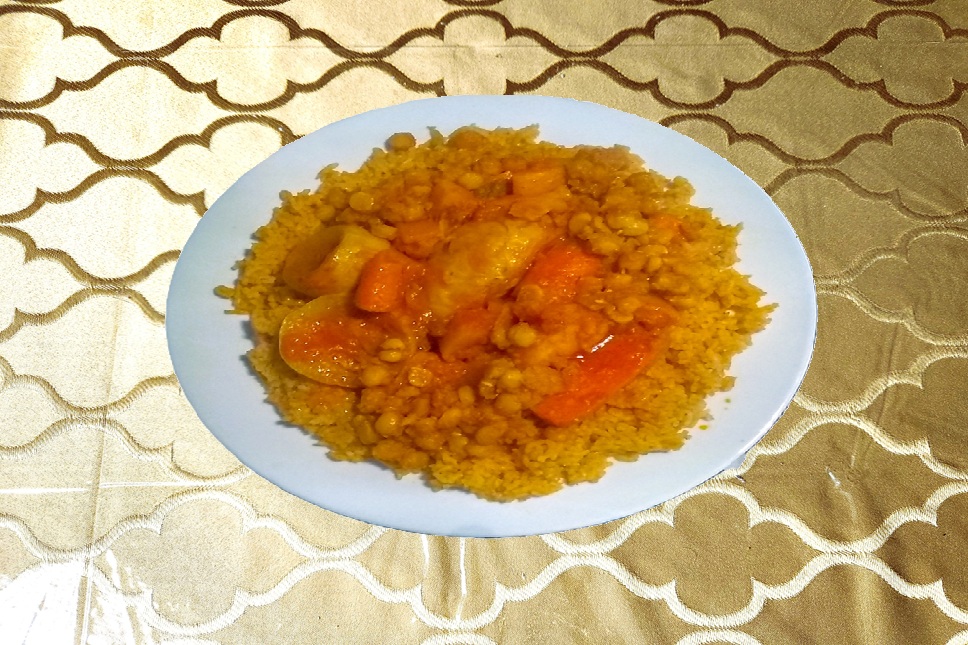
    Sauces are particularly important, especially for rice dishes, couscous or pasta dishes. For all your sauces, split green peas and chickpeas are the perfect substitute for meat, chicken or fish.

    Split Peas

    It will only be necessary to pre-cook the split peas and the chickpeas before starting the sauce in which they will be integrated. Simply cook them in water. Split peas can melt if you cook them for too long. Stop cooking them when you notice signs of crushing peas.

    Chickpeas

    Chickpeas should be tender, but not fully cooked. Some people prefer them skinless. For this, you can use a colander to separate the juice and save it for the sauce. Then, with clean hands, gently rub the peas against each other and put them in a large bowl filled with water. All the skins will rise to the surface. Get rid of them and save your peas for the sauce. If you are using precooked and frozen chickpeas, put them in just enough water to cover them in a bowl and heat them for two or three minutes in the microwave oven, depending on the power setting of your microwave oven and you can proceed to remove the skins.

    Black Eyed Peas, Large Kidney Beans and Black Beans

    Black eyed peas are excellent prepared on the side and served with all types of fried rice with vegetables or added to salads. As for large kidney beans, they are perfect in stew served with pasta, especially “farfalle” pasta. Black beans are perfect in stew served alongside many dishes or added to salads.

  • Eating Organic and Vegetarian

    Eating Organic and Vegetarian

    This site promotes everything that is related to organic vegetarian and vegan food. If you have vegetarian recipes you would like to share or, simply want to share any information helpful to this particular lifestyle, you will soon be able to do it on this site free of charge. There will also be information, including recipes, that are helpful to a vegetarian and vegan audience.

  • How To Choose Your Food Ingredients and Kitchen Ustensils?

    How To Choose Your Food Ingredients and Kitchen Ustensils?

    Eat organic and use filtered, purified or spring water for drinking and cooking, anytime you can.

    Choose Organic

    Vegetarian eat mostly plant based food. A big issue here is genetically engineered crops, pesticides and herbicides. The best you can do is to buy everything organic anytime you can, even your spices. Organic products are not genetically modified and they are without pesticides or herbicides, thus contribute less to the buildup of toxins in our bodies. The easiest way to know if a product is organic would be to see if it is labelled so. It should be mentioned. However, some products are falsely labelled organic. Sadly, there are many. Fortunately, the USDA (United States Department of Agriculture) maintains a database of products that are truly certified to be organic, the “Organic INTEGRITY Database“. Similar databases must exist elsewhere.

    Dairy products

    Use organic dairy products anytime you can. Choose milk preferably from well-kept cows, cows raised naturally in pasture, not treated with antibiotics or hormones. Also not all cheeses are vegetarian. Read the labels and look for the words “vegetarian”, “microbial rennet” or “vegetable rennet”. Most cheeses are made with animal rennet, most precisely coming from slaughtered baby-ruminants. Avoid cheeses that have vague terms such as “rennet” or “culture”. It could be anything. If it is not specified, chances are they are not vegetarian. Better yet, consume products from happy cows, those that are not abruptly separated from their newborns for their milk or slaughtered when they are no longer profitable. These are the best.

    Broths and Bouillons

    Broths and bouillons are very practical and give flavor to our dishes, but those we generally find on shelves are rarely organic, vegetarian or without unwanted ingredients. What most often makes the special flavor of broths is monosodium glutamate ( MSG ), an ingredient which occurs naturally in many foods and even in our bodies. MSG also exists in a synthetic state sometimes used in some broths and bouillons and and processed foods. It has unfortunately become a very controversial food additive.

    This study lists some foods which seem to trigger MSG-toxicity. But there are studies like the ones mentioned in this review of multiple studies about MSG’s alleged dangers on human health.

    If you often buy bouillons but worry about MSG, there are other options. You can buy organic bouillons without MSG. Another solution will be to make your own broth with fresh organic vegetables and your favorite spices. This has the added advantage of consuming only what you really want. To enhance the taste of your broths, add carrots with a hint of lemon juice and some vegetables with natural MSG such as peas, tomatoes, potatoes, etc. Use rainbow carrots for more flavor. Or you can simply cook a soup of your favorite vegetables and collect the juice as broth.

    Canned goods

    Use fresh food anytime you can. If you must use canned food, choose glass jars without preservatives. Most metal cans linings have BPA (Bisphenol A), a hazardous material, the same material found in plastics. BPA in the lining can migrate into the food contained in the cans. Some food producers aware of the attention paid to this fact, are looking for alternatives to BPA. Cans bearing the words “Non-BPA Lining” are multiplying on store shelves.

    Choosing ingredients carefully and cooking our own food has the considerable advantage of minimizing our consumption of unwanted ingredients or toxins that can have a detrimental effect on our health.

    Water

    Use water purified from all harmful elements including fluoride for drinking and cooking. Tap water sometimes contains heavy metals, fluoride and a host of drug residues. The most common methods used in purified water found in shops are reverse osmosis and distillation. It is mentioned on water bottles. You can also install a purification system on your water supply, use a filter that uses the reverse osmosis system or another that removes all toxins including fluoride. Common water filters like Brita, Pur, etc., do not remove fluoride. Spring water contains a small amount of naturally occurring fluoride. If you can’t find purified water, add coriander and turmeric to your ingredients. These two spices are known for their cleansing properties.

    What About Our Kitchen Ustensils?

    It is logical that well choosing our food ingredients is completely useless if we end up cooking, warming, storing or eating in toxic ware. It is hard to avoid everything that could be toxic now a days, but she should follow some basic rules:

    • Avoiding heating food or storing hot food or drinks in plastic containers and cups; Microplastics and toxins can leak into your food or drinks. Hot food is better stored in glass, ceramic or new bone bowls and containers.
    • Avoiding disposable dinnerware, food packaging and cups in plastic, aluminum and those that have hidden per-and polyfluoroalkyl substances (PFAS) i.e., “forever chemicals“; disposable food packaging often contains forever chemicals.
    • Avoiding non-stick cookware coated with PFAS like Teflon; Ceramic and Stoneware are generally better alternatives.
    • Choosing natural wood ustensils over those that are coated with some unknown substance.

    Microplastics are everywhere. It has become nearly impossible to avoid them. They seem to be everywhere, in food, air, bottled water, even rainwater and glaciers. Whilst we can’t totally avoid them, we can do our best to minimize their ingestion because the long-term effects they might have on our health are still unknown.

    We can make our own small contribution here by decreasing the production and use of plastics just by recycling properly the plastics of our day-to-day lives. No contribution is too small.